The two wines we are tasting today are the first made by Robert Hall Winery to earn the Regenerative Organic Certified® (ROC®) designation. Both wines are available exclusively at Whole Foods. We received these wines as tasting samples.
Robert Hall Winery’s journey to Regenerative Organic Certification began in 2021 with a 48-acre block of vines surrounding the winery in the Paso Robles, Geneseo AVA. 43 acres were converted to Regenerative Organic practices and five acres were farmed conventionally, as before, but with the addition of cover crops and compost to improve soil.
From the beginning the winery shared its progress with other wineries and interested consumers. The study collected measurable data from the test and control vineyards that included: water retention, soil and biodiversity, impact of temperature, carbon sequestration, yields and wine quality. In February Robert Hall released the findings of the study. A couple of months later we wrote about those findings and had a first taste of the wines made from the test vineyards.
An abbreviated version of the findings: increased water retention, soil that changed from hard to friable and alive with greater microbial activity, lower soil and canopy temperatures, increased carbon sequestration (by 192%), increased yields and wines that exhibit increased complexity, freshness and vibrancy.
Regenerative Organic Certification requires organic farming as a baseline, with additional practices like no-till, ground cover planting and animal integration. In addition, certification has requirements in the areas of social fairness and labor practices. Regenerative Organic Certified® is overseen by the 501(c)3 nonprofit Regenerative Organic Alliance.
Let’s Taste
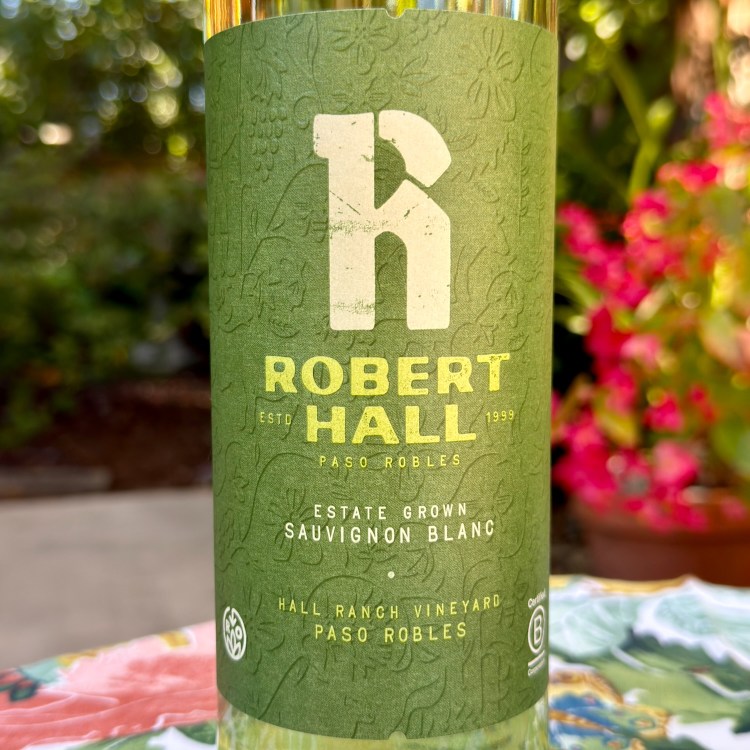
2025 Robert Hall ROC® Sauvignon Blanc, Paso Robles — pale yellow with generous floral, tropical and herbal aromas. Flavors are citrusy with dried hay and underripe pears. The finish is long with juicy acicity. 13% ABV. SRP $29.99
Such a refreshing wine and so sippable. Buyer beware! The wine is a blend of 85% Sauvignon Blanc and 15% Grenache Blanc.

2024 Robert Hall ROC® Cabernet Sauvignon, Paso Robles — bright ruby with generous aromas of ripe boysenberries, alfalfa hay and berry brambles. Flavors are generous with blackberries, raspberries and boysenberries supported by grippy tannins and tongue-tingling acidity. 14.5% ABV. SRP $29.99
What a lively wine, a blend of 86% Cabernet Sauvignon and 14% Petite Sirah. Both wines definitely exhibit the “increased complexity, freshness and vibrancy” identified as an outcome of Hall’s ROC® trial.
Robert Hall Winery’s path to ROC® is one that is being followed by an increasing number of wineries and there is a lot of interest in Paso Robles. Tablas Creek was the first to announce their ROC® status in August 2020, building on their organic and biodynamic certifications. As of March, Paso Robles is home to six ROC® wineries. And, according to the Regenerative Viticulture Foundation, the One Block Challenge™, similar to the Robert Hall Vineyards trial, started in Paso Robles in January 2025 and now includes forty-six growers.
If you’re looking for further reading about ROC® beyond their website, several informative articles about Regenerative Organic Certified® practices and wineries have been published recently. One in Forbes is a detailed look at the six Paso Robles wineries and another takes a look at a vineyard in Mendocino.

My introduction to ROC® came though wine, but I now look for it on labels throughout the grocery store. When you see the ROC® logo you know organic and regenerative practices are followed and verified by inspection. There is no potential “green washing” that may come with unverified (and undefined) terms like regenerative farming; the same applies to organic. Look for certification seals on the food/wine you buy to be certain of what you are purchasing. One thing I appreciate in particular about the packaging of the Robert Hall ROC® wines is the ROC® logo is featured prominently on the bottle labels. They don’t make me search the back label for the fine print. And they feature their B Corp Certification prominently as well. Very smart.

Thanks to Calhoun & Company Communications for organizing our tasting.
Cheers!

 Follow PullThatCork on Bluesky
Will have to look for these! When I participated in the Wine Writers Education Tour of Paso in 2022, we visited Robert Hall. It was fascinating to taste wine from regeneratively farmed fruit vs more conventional. We actually did the tasting blind and pretty much across the board you could tell the regeneratively farmed wine because it seemed more fresh and alive.
Fresh and alive are great descriptions. I’m glad you had the experience firsthand. Cheers!